

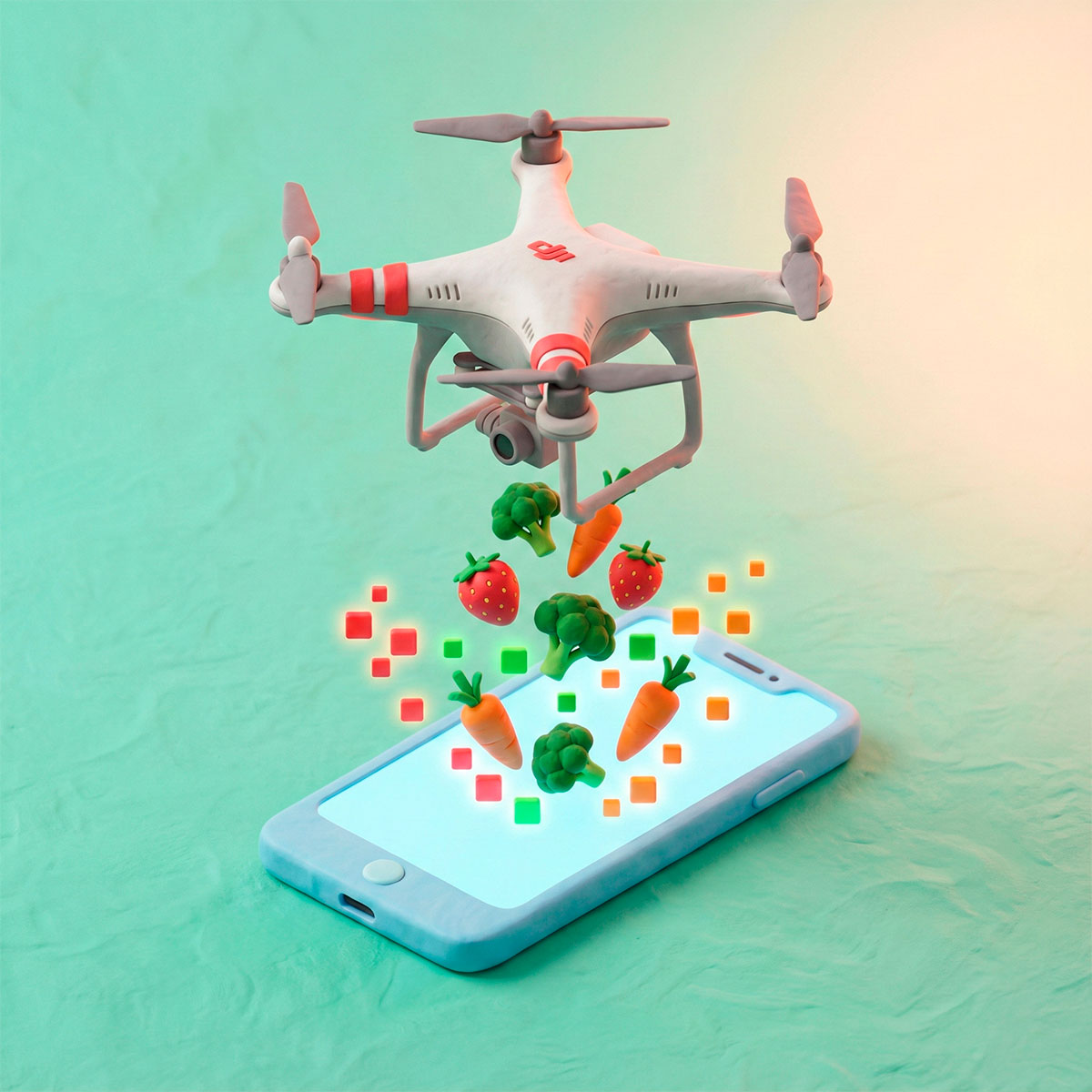
While everyone fights to sell fashion or electronics, the real gold mine of e-commerce lies in what we eat every day.
McKinsey’s report identifies “Food e-commerce” as the fastest-growing segment, projecting it will reach up to $4 trillion by 2040. But there is a trap: most brands are handing this growth over to delivery apps, losing their data and margins in the process.
Actionable Takeaways
- The Opportunity: Food is the highest frequency, highest retention category; it is the engine of future growth.
- The Trap: Selling only through third-party apps is “renting” your customers. You need First-Party Data.
- The Tactic: Use social video to “sell freshness.” Authenticity converts better than perfection.
Want to build a channel that converts? Let’s talk at Infinite Stair LLC.
1. The Data No One Can Ignore: $4 Trillion on the Table
E-commerce is no longer just buying a phone every two years; it’s doing the weekly grocery run. According to McKinsey, the food and beverage segment has grown at a rate of 34% annually and is projected to represent up to 20% of all global e-commerce by 2040, moving between $3 and $4 trillion.
This is not a niche. It is the next big arena of competition. The question isn’t if people will buy food online, but who they will buy it from: an aggregator platform or directly from your brand?
2. The Danger of “Renting” Customers
In the race to capture this demand, many brands make the strategic mistake of handing their entire operation over to delivery apps (Rappi, UberEats, etc.).
While these apps are useful for initial coverage, they have a lethal hidden cost: they keep the relationship. You don’t know who bought from you, what else they like, or when they need a refill. You are just a commodity provider paying high commissions.
To survive in the Food Arena, you need First-Party Data. You need to know that “Maria buys almond milk every Tuesday” so you can offer the cookies that pair perfectly with it on Monday night. Building your own store is the only way to protect your margin and your future.
3. The Psychology of Freshness: A Visual Language
Selling food online has a barrier that clothing does not: the fear of quality. “Will the bananas arrive green?”, “Is the meat fresh?”.
McKinsey speaks of expansion into “emotional goods” and storytelling. In food, that storytelling sums up in one word: Trust.
Your own store cannot look like a cold database catalog. Freshness is a visual language. Photos must convey texture, color, and life. But in 2025, the photo is no longer enough.
4. The Winning Tactic: Social Video and Authenticity
This is where Social Video enters as your secret weapon.
A perfect studio photo can look fake (“food styling”). A quick video on TikTok or Instagram Stories, showing the real product being packed or cooked, screams authenticity. In our guide on “Mobile-First Grocery Ecommerce”, we explain how to integrate this content directly into your purchase flow.
- Don’t say it’s crispy: Break the bread on video and let the crack be heard.
- Don’t say it’s fresh: Show the team selecting the fruit that very morning.
Video is the perfect channel to eliminate the friction of mistrust. It converts the shopping experience from a transaction (“I need rice”) to an emotional connection (“I want to cook that”). By integrating this content strategy into your own channel, you aren’t just selling food; you are selling the assurance that what arrives at home is exactly what the customer desires.
Master the Arenas of the Future
This article is part of “The Strategic Oracle” series, where we contrast our 2023 projections with 2025 market data to give you a proven roadmap.