
UX Research · User Needs & Usability
UX research services for decisions grounded in user evidence.
Understand how people evaluate, navigate, and use your ecommerce experience.
We define the research question, select the method, and turn observed evidence into practical design priorities.
Which assumptions are shaping your next design decision?
Start with the decision your team needs to make. Research is useful when the question, participants, and evidence fit that decision.
What do buyers need to understand?
Explore the context, information, and trade-offs involved in evaluating the offer.
Where does the experience become difficult?
Observe people carrying out relevant tasks on the current experience or a prototype.
How should information be organized?
Explore labels and groupings, then evaluate whether people can find what they need.
Choose the method for the question.
User interviews
Explore recent experiences, needs, constraints, and the language people use to describe them. Typical output: evidence themes and decision implications.
Usability testing services
Observe relevant tasks on a website or prototype to identify barriers and questions. Typical output: task findings and prioritized issues.
Card sorting
Explore how participants group information and describe possible categories. Typical output: grouping patterns and structure hypotheses.
Tree testing
Evaluate whether people can find information in an existing or proposed hierarchy. Typical output: findability observations and navigation priorities.
Evidence synthesis
Connect findings with existing research, available data, and the decisions ahead. Typical output: research report and next priorities.
Information architecture connects labels, content, and navigation.
Card sorting can inform possible groupings. Tree testing evaluates routes through a hierarchy. The final structure also needs to account for the catalog, content, and business requirements.
Recruit for the decision you need to make.
There is no participant count that fits every research question. The plan should make its reasoning and limits clear.
Relevant participants
Define the experience, needs, and characteristics that matter to the study.
Coverage
Identify which user groups, tasks, devices, and contexts need to be represented.
Sample rationale
Explain the planned sample, what it can support, and what it cannot establish.
Review and adjustment
Review evidence quality and gaps as the study progresses, within the agreed scope.
From a research question to design priorities.
Commercial measurement informs every stage.
Discover
Review the decision, audience, current experience, and evidence already available. Deliverable: research questions and evidence gaps.
Define
Agree on methods, participants, tasks, sample rationale, and responsibilities. Deliverable: study plan, screener, and protocol.
Develop
Run the agreed research and analyze the evidence with its context and limitations. Deliverable: documented observations and findings.
Deliver
Connect findings with decisions, priorities, and questions that need further work. Deliverable: research report and recommendation handover.
Make the evidence traceable to the decision.
A useful finding connects evidence with a practical implication. It also states where the evidence is limited.
Observations
Record what participants said or did, along with the task and context.
Findings
Identify patterns, differences, and questions that remain unresolved.
Recommendations
Explain the design implication and what should be evaluated next.
From the Blog
Further reading.
Articles from our blog on the topics this page covers.
- Analytics Tools · Article
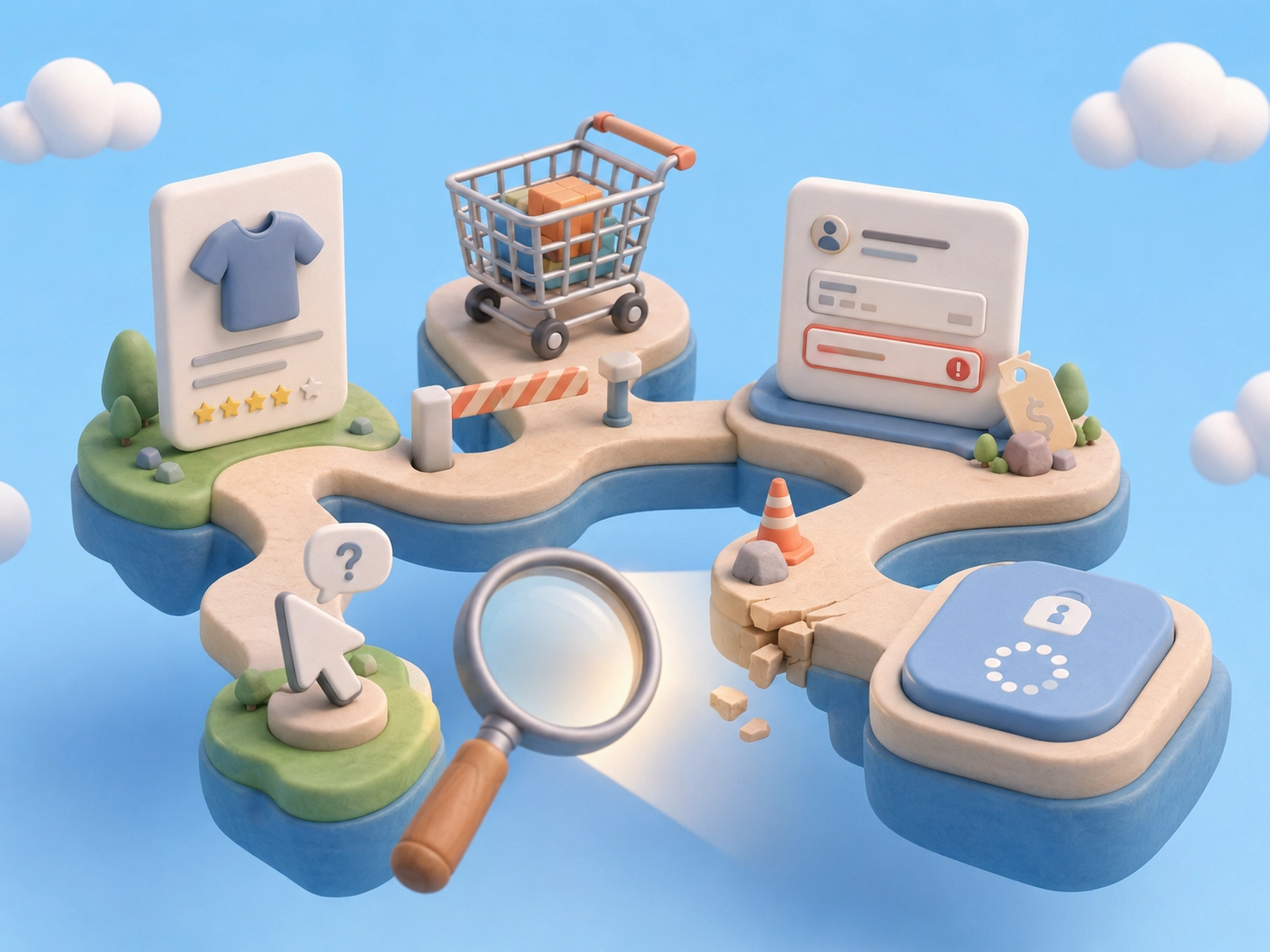
Ecommerce Friction: How to Find the UX Issues That Slow Down Sales
More traffic works better when your store helps people buy. Ecommerce friction appears when customers hesitate, repeat clicks, get confused, lose trust, or leave before checkout. This article shows how to detect those friction points with simple usability analysis, data, and customer behavior before guessing what to redesign. - Customer Experience · Article

Understanding What Your Customer Needs Improves Your Store
You know your business. But your customers see your store differently. Learn how simple user research helps you improve your store with real customer signals, not guesses. - Customer Experience · Article
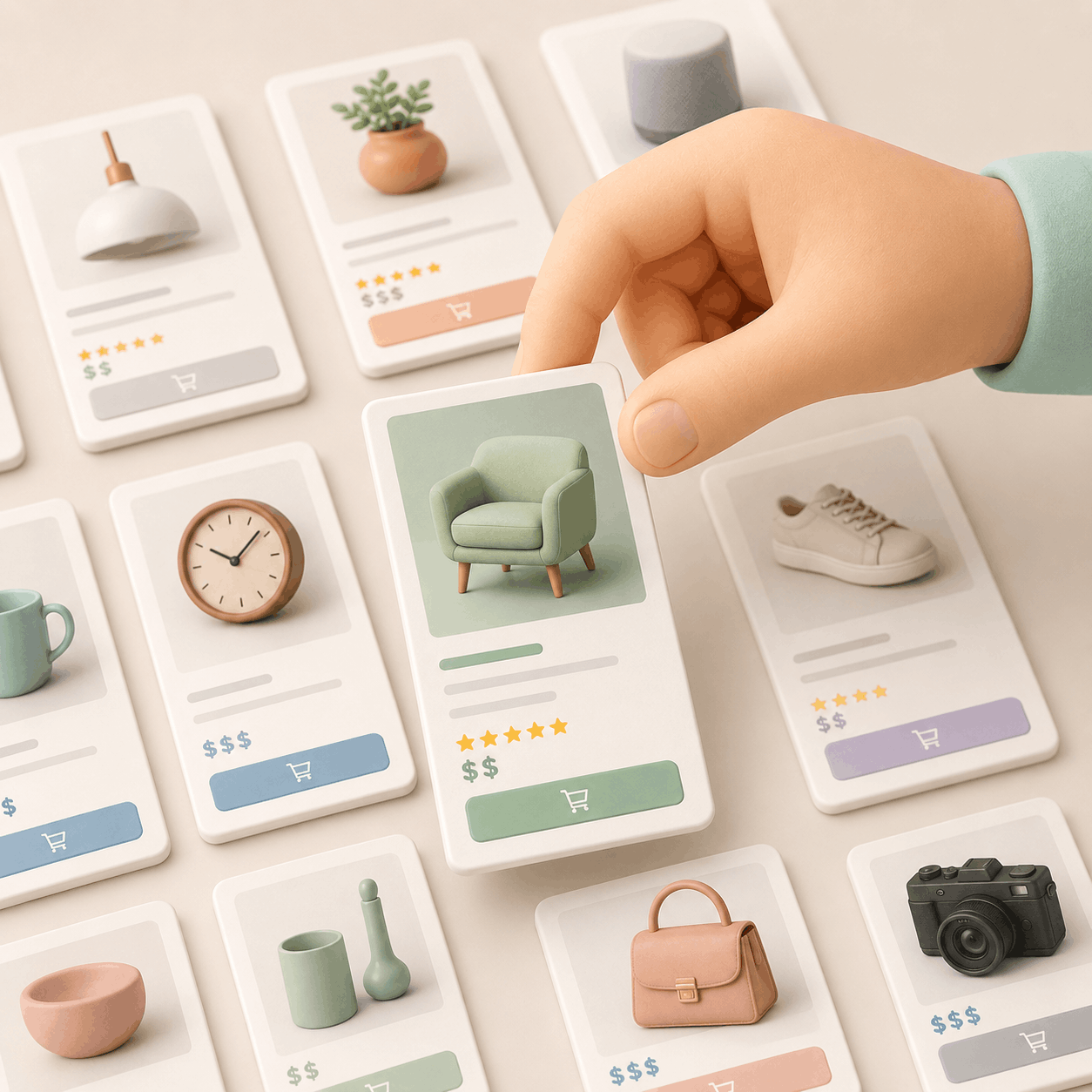
Turn Your Store Menu Into Your Best Salesperson
Your store menu should not be just a list of products. It should help customers understand what they are looking for, what options they have, and which product fits best. This article explains how navigation, category pages, filters, and product pages can guide better buying decisions. - Business Models and Growth · Article
From Launch to Scale: My UX-Led Reading of The Cold Start Problem
A UX-led reading of The Cold Start Problem: how startups move from launch to defensibility through research, design, and growth. - Artificial Intelligence · Article

AI hype will drown companies in noise. But real creatives will rise
AI isn’t replacing creativity, it’s replacing tasks. The real danger isn’t automation. It’s believing generative content is the same as original thinking. This article breaks the myth and defends the human insight behind real growth. - Customer Experience · Article
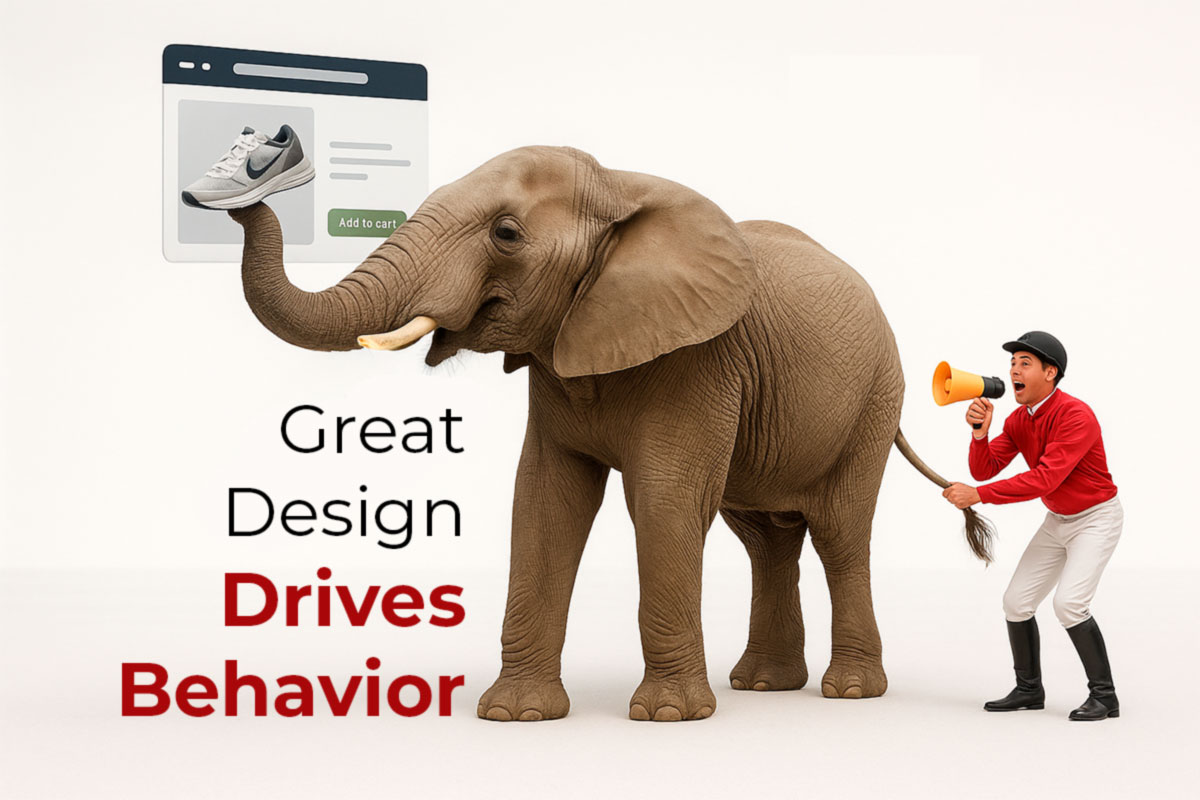
UX Is Emotion: The 7 Habits of Stores That Convert in 2025 – 2026
This article unpacks the 7 behavioral habits behind the most successful e-commerce stores of 2025. Learn how to design for emotional flow, reinforce trust at every step, and turn your store into a seamless engine of momentum, clarity, and conversion.
Questions about UX research services.
A UX audit evaluates the experience through expert review. Research brings evidence from relevant users and tasks. The two can inform each other, with a defined scope for each.
We start with your decision and research question. Interviews, usability testing, card sorting, and tree testing address different needs; not every project needs all of them.
The sample depends on the question, method, audience diversity, and evidence required. We document the rationale and the limits rather than apply a universal number.
No. Small iterative usability studies can be useful in a focused context. That guidance does not establish the sample for every interview study, user group, or quantitative evaluation.
Yes. The tasks and interpretation account for what the experience supports, including prototype limitations.
Recruitment responsibilities, eligibility criteria, incentives, and scheduling are defined in the proposal. We can review an existing customer source or scope additional recruitment.
The agreed study plan, documented findings, limitations, and design priorities. Supporting materials and additional deliverables are specified according to the scope and permissions.
Cost depends on methods, recruitment, participant profiles, sessions, analysis, and delivery. Incentives, tools, and additional rounds are specified separately where applicable.
No. Research informs decisions and identifies questions to evaluate. Commercial outcomes depend on the changes implemented and the wider business context.
Related services.
Which user question should your team answer next?
Share your experience, audience, and next design decision.
We can discuss a focused research plan and the evidence it should provide.
Schedule a meetingPrefer to write first? Tell us about your project.